Take the repetitive work out of your organisation

Integrations between the tools you already use and workflows that take over the manual work. From enquiry to invoice, with fewer mistakes and a clearer view.
What we do
Process analysis
We map which steps your team performs by hand today, where information is retyped and where mistakes creep in. That is where we start.
Building workflows
We build workflows that take over the repetitive work, together with your team, so they match daily practice rather than a diagram on paper.
Integrations
We connect your existing tools to each other, so information flows through automatically from enquiry to invoice without double entry.
Documentation
Every automation is documented, so your team knows what is running, why, and how to adjust it themselves when something changes.
Automating from analysis to handover
Analysis
Step 1
First we look at how information flows through your business today: which tools you use, where people retype data and where it goes wrong. That tells us which automations return the most.
Proposal and plan
Step 2
You get a concrete proposal with a clear scope: which processes we automate, which integrations that needs and in what order we work. So you know exactly what to expect up front.
Building in short iterations
Step 3
We build the workflows together with your team and take them live step by step. You see the first manual work disappear quickly, give feedback on what you notice and we adjust before we build the next integration.
Handover and aftercare
Step 4
Every automation is documented and handed over. Your team knows what is running and can manage it themselves. We stay on board to follow up and keep building when your processes change.
Workflows that run without anyone watching them
Working integrations between the tools you already use
Workflows that take over the manual work, live and in use
A clear picture of how information flows through your business
Documentation that lets your team manage everything itself
Follow-up and adjustments by the Ulvio team
For teams losing too much time to retyping

Growing SMEs
Your business is growing and the admin is growing with it. Your team spends more and more time retyping and chasing. You want that work off their hands.
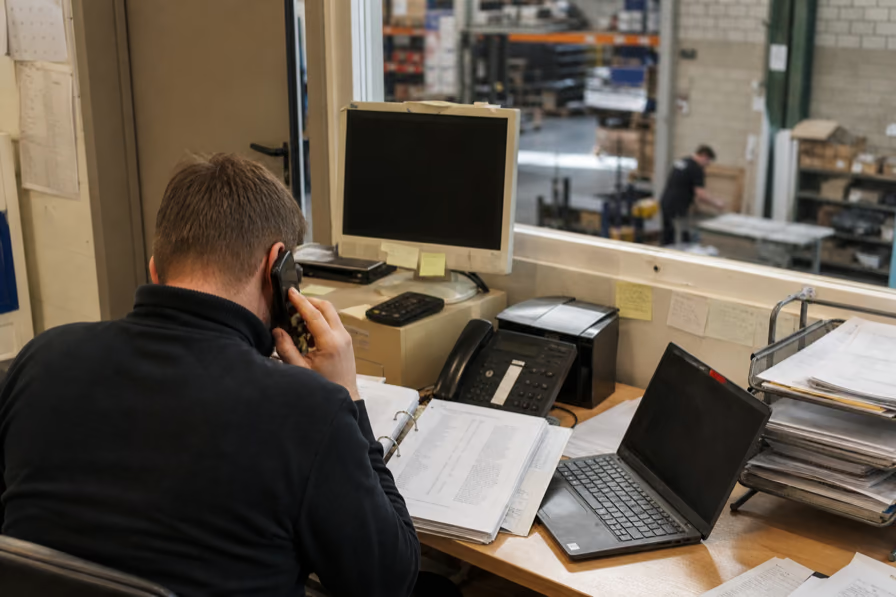
Ageing or scattered tools
You work with tools that do not talk to each other. The same data sits in three places and is fully correct in none of them. You want everything to flow through automatically.

Getting started with AI
You want to put AI to work, but your processes are not ready. You are looking for a partner that gets your workflows in order first and then looks at where AI genuinely helps.
Everything you want to know before we start
How do you approach an automation project?

We start with an analysis of how information moves through your business today and where your team does manual work. You then get a proposal with a clear scope. We build the workflows together with your team and take them live step by step, so you see results quickly and can steer. That is how Omnia Vastgoed now handles two to three times more properties per employee, with eighty per cent less manual copying.
Do we have to replace our tools in order to automate?
Usually not. We start from the tools you already use and connect them to each other. Only when a tool is genuinely in the way do we discuss an alternative. The aim is for your team to keep working the way it is used to, with fewer manual steps.
What if a process changes after the automation goes live?
That happens, and we account for it. Every workflow is documented, so your team knows what is running and can adjust what it needs to. For larger changes we stay on board: we follow up, think along and keep building on what works.
Who manages the automations after handover?
That is your choice. We host and manage the workflows if you want us to, or they run in your own environment. Either way you get the full source code and documentation, so you are never dependent on us. There is no lock-in.
Which companies does automation make the most sense for?
Automation pays off most where information still moves from one tool to another by hand and costs time and mistakes every week. Usually that means SMEs and scale-ups between 5 and 200 employees, but just as often one department inside a much larger company.
“Working with Quinten and the team at Ulvio has been a real game changer for us. We come from a traditional, non-technical world and were a long way from digitalisation and AI. With their guidance we did take that step. And how. We felt strongly supported from day one, with people who genuinely listen to what we need.”
Owner, Van De Velde Schilderwerken